

Meeting Report
On April 9, 2026, during the 2026 Annual Meeting of the Chinese Society for Cell Biology (Hefei), the 10th Asia-Pacific Organization for Cell Biology Congress, and the 16th International Federation for Cell Biology Congress, the S03 APOCB Session: Membrane and Membraneless Organelles: Structure, Dynamics and Physiology was successfully held. The session was organized by Professor Xuebiao Yao and Professor Liang Ge, and chaired by Professor Liang Ge.
This session focused on the assembly, dynamic regulation, and physiological functions of membrane-bound and membraneless organelles. Leading scientists worldwide shared breakthrough discoveries, providing new insights for organelle biology and disease mechanism research.
Research Highlights
Researcher Pengli Zheng revealed the mechanism by which ER morphology regulates mitochondrial transport. The ER protein SPG43 controls mitochondrial motility at membrane contact sites via phase separation and calcium regulation, promoting the interaction between mitochondrial adaptors and kinesin. This explains mitochondrial depletion in axons underlying hereditary spastic paraplegia (HSP).
Dr. Xin Feng reported the full-chain development and translational applications of Magnetic Particle Imaging (MPI). Using bacterial magnetosomes, the team overcame the “relaxation limit” and achieved 80 μm high-resolution imaging. Custom-developed hardware enabled vascular inflammation imaging, stem cell tracking, and the first-in-human clinical trial, validating safety and feasibility for cell therapy monitoring.
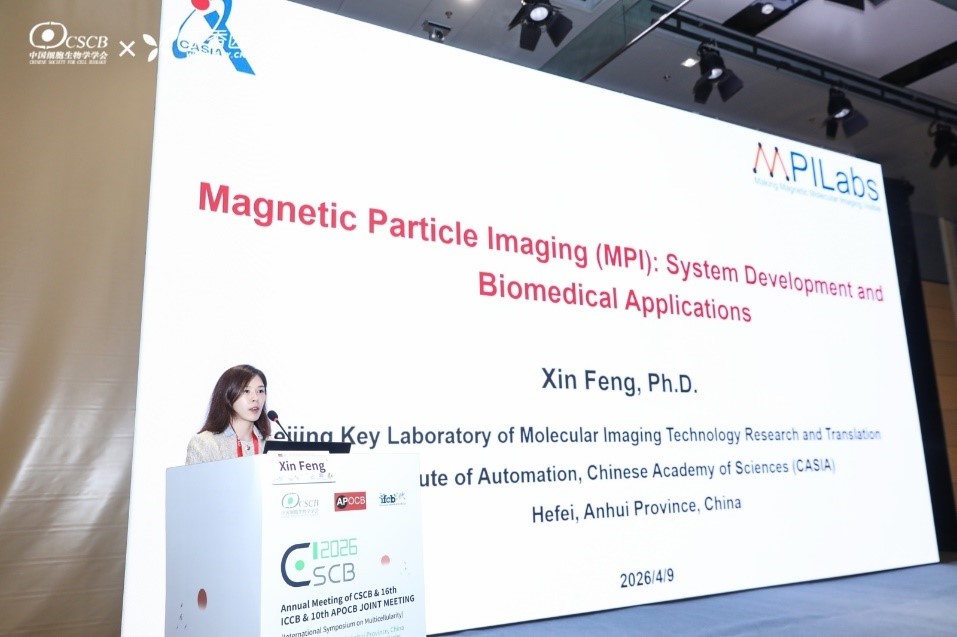
Speaker Xin Feng Institute of Automation, Chinese Academy of Sciences
Dr. Giovanni D'Angelo systematically mapped the 3D distribution of 172 lipids in mammalian brain using MALDI imaging mass spectrometry. Lipid composition accurately predicts anatomical location, corresponding to cell types, neuronal connectivity, and white matter heterogeneity, redefining the functional roles of lipids in neurobiology.
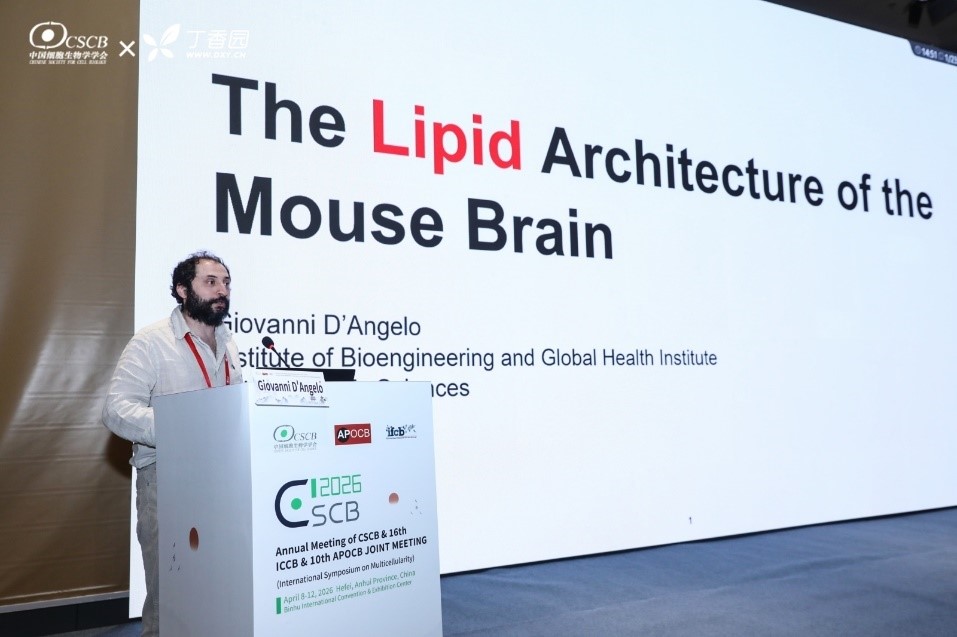
Speaker Giovanni D'Angelo École Polytechnique Fédérale de Lausanne
Professor P. Todd Stukenberg elucidated how centrosome amplification drives cancer evolution. Cancer cells survive via centrosome clustering to form pseudo-bipolar spindles, causing chromosome bridges, micronuclei, chromothripsis, and cGAS-STING activation to promote metastasis. Targeting Aurora B kinase enables selective cancer cell killing without harming normal cells.
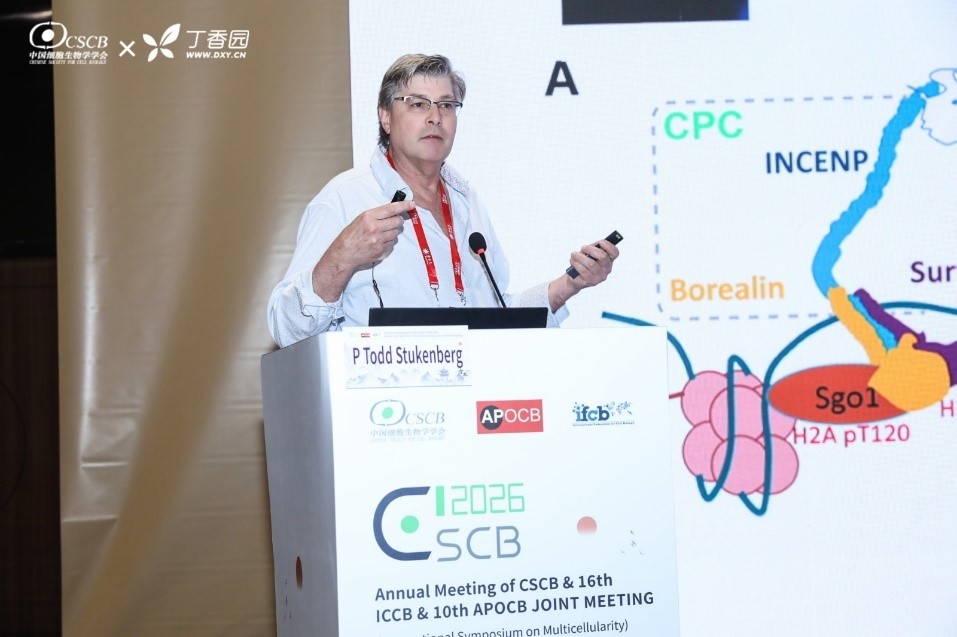
Speaker P. Todd Stukenberg University of Virginia
Professor Liang Ge reported major advances in unconventional protein secretion (UPS). The THU pathway, centered on TMED10 and ERGIC, mediates secretion of leaderless proteins including IL-1β and Tau via unfolded transmembrane transport, offering key targets for inflammatory and neurodegenerative diseases.
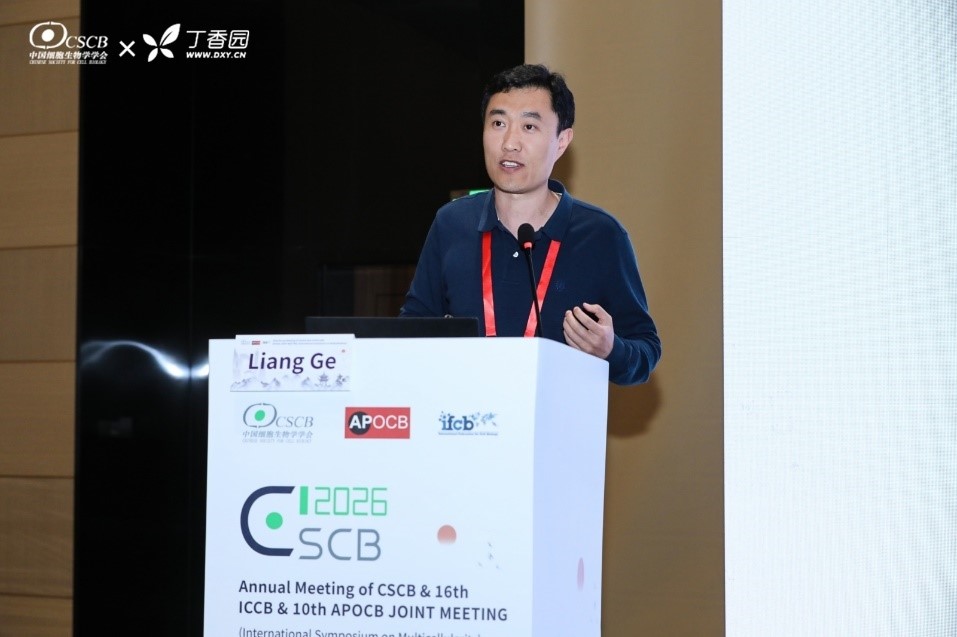
Speaker Liang Ge Tsinghua University
Professor Yih-Cherng Liou discovered that NuSAP maintains centrosome integrity by recruiting CEP57 to the centriole basal torus, ensuring faithful mitosis and chromosome segregation. Pathogenic mutations cause centrosome collapse, linking to microcephaly and developmental delay in MVA syndrome.
(National University of Singapore)
Professor Kai Jiang uncovered the regulatory mechanism of Nek1 kinase in centriolar doublet microtubule assembly. Nek1 promotes doublet formation via the FM motif and collaborates with katanin to eliminate aberrant doublets, suppressing centriole overduplication and multipolar spindle formation to maintain genome stability.
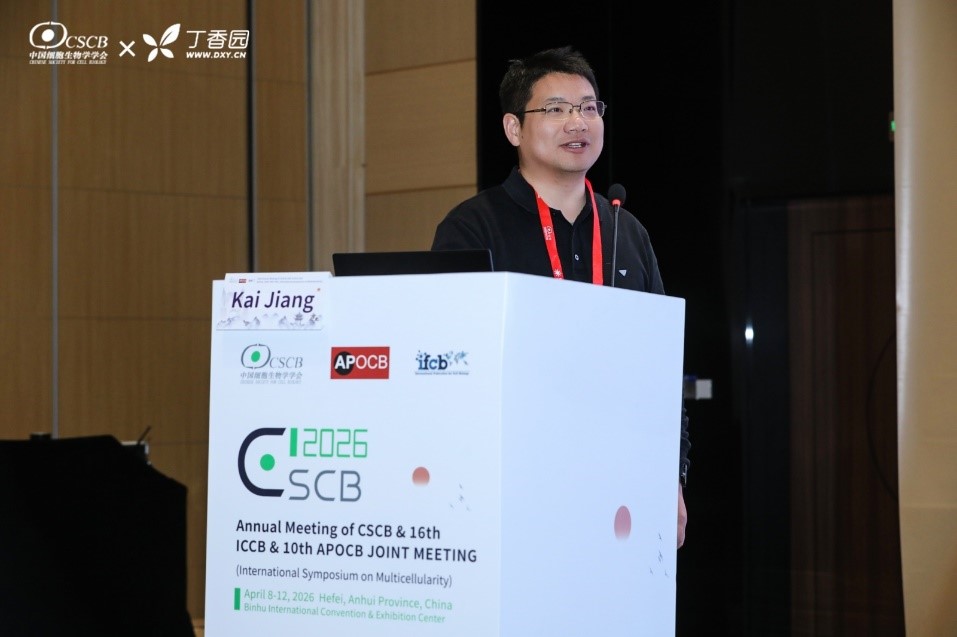
Speaker Kai Jiang Wuhan University
Professor Won-Jing Wang revealed the role of GABARAP (a centriolar satellite protein) in DNA damage response and autophagy. DNA damage triggers satellite disassembly, PCM1 degradation, and MIB1-mediated GABARAP downregulation to activate autophagy. GABARAP acts as a tumor suppressor in renal cancer; autophagy inhibitors reverse tumor progression caused by GABARAP loss.
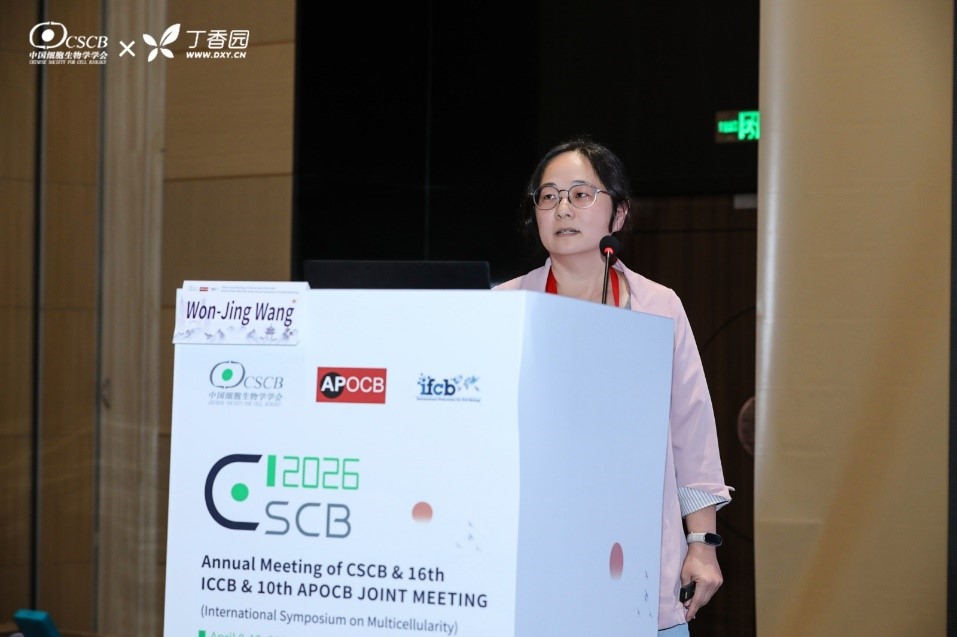
Speaker Won-Jing Wang National Yang Ming Chiao Tung University, Taiwan, China
Professor Wei Li dissected pH homeostasis during melanosome maturation. Ion channels TPC2, OC2 and V-ATPase coordinately regulate Ca²⁺, Na⁺, and Cl⁻ fluxes to control melanosomal pH. Mutations disrupt melanin synthesis and cause hypopigmentation disorders, providing therapeutic targets for albinism.
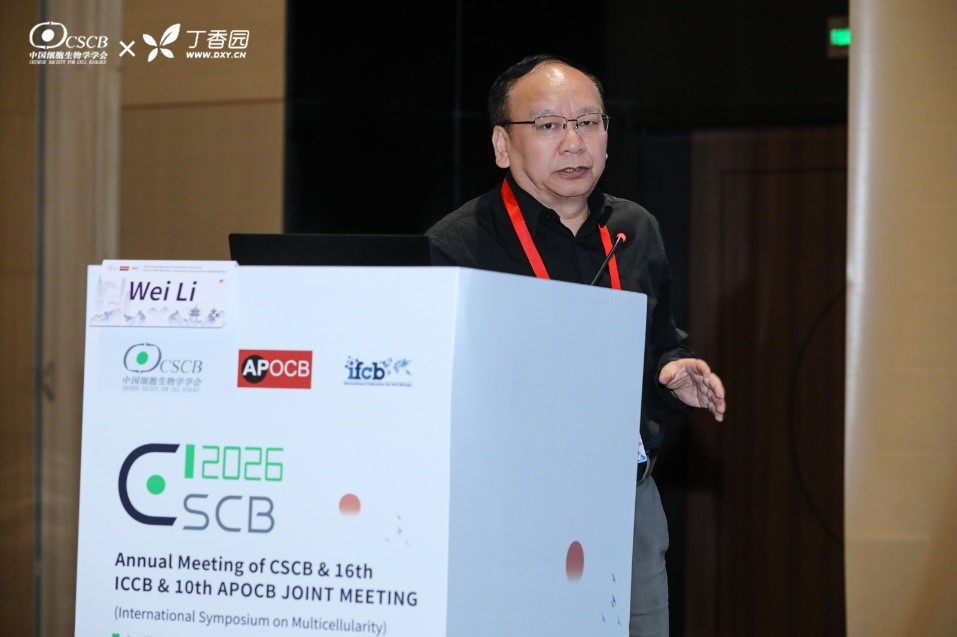
Speaker Wei Li Capital Medical University
Professor Lixin Zhang proposed the 5M Strategy for intelligent biomanufacturing: Mining, Modeling, Manipulation, Measurement, Manufacturing. A natural product library of >100,000 strains was established, with thousand-fold yield improvement for ivermectin and sharply reduced production costs, breaking international monopolies.
Conclusion
The S03 session comprehensively covered cutting-edge topics from molecular mechanisms and structural biology to translational medicine. It built a key platform for interdisciplinary innovation and global collaboration in organelle biology, disease theranostics, and biomanufacturing.
© Copyright Asian-Pacific Organization for Cell Biology All rights reserved.